Here is a song I wrote in 2005, illustrating the Wood element. I was struggling with Lyme Disease while going through student clinic for my acupuncture license at the time. It’s all about getting things done one step at a time. I hope you enjoy it!

Here is a song I wrote in 2005, illustrating the Wood element. I was struggling with Lyme Disease while going through student clinic for my acupuncture license at the time. It’s all about getting things done one step at a time. I hope you enjoy it!
As our world turns to a global network, many people are finding more health resources at a distance. A lot of therapists have been developing methods of distance healing for their patients. Since acupuncture is energy medicine, it is ideal for just this sort of thing. Acupuncture uses the needle to focus qi/energy in the qi network of the body. As the ancients knew, and as physics has verified, all of the universe is nothing more than particles and waves of energy, appearing to be solid objects. And none of us can dispute the force of gravity, which is invisible in all ways but the scale and planetary movement.
The sun is 93 million miles away. And it can literally cook an egg on the pavement with nothing but photons. This is similar to how distance healing works. Distance doesn’t lessen the power of energy! Acupuncture is all about movement of qi. Therefore, it is very easy for an acupuncturist to do their craft over any distance, as long as the patient is ready and in a receptive state.
The beauty of virtual acupuncture is you can lie down at home on a couch or a bed and relax. Meanwhile, your acupuncturist performs the session in their office or anywhere that is conducive to privacy. After the session, there is no need to get up and drive home. In fact, I frequently sign off quietly and let people soak in the results in their own time. And the results are excellent. Sometimes the distance session goes even deeper than an in-person visit.
So whether you are living in a remote region or staying home due to covid, acupuncture is still available to you.
To learn more about the benefits of acupuncture and holistic care, click here for additional topics. Ready to give it a try for yourself? Book your next visit now! Services available both virtually and in person.
Infertility affects millions of couples worldwide, and for many, the journey to conception involves more than medical testing and assisted reproductive technologies (ART) like IVF. Increasingly, patients and clinicians are exploring integrative care, combining conventional medicine with evidence-informed complementary therapies. Among the most studied of these is acupuncture, a component of Traditional Chinese Medicine (TCM) practiced for more than 2,000 years.
Today, acupuncture is not viewed simply as an “alternative” therapy, but as a supportive physiological intervention that may influence hormonal regulation, blood flow, stress response, and reproductive function. While research findings are mixed and nuanced, a growing body of clinical evidence suggests acupuncture can play a valuable adjunct role in fertility treatment and natural conception efforts. continue reading
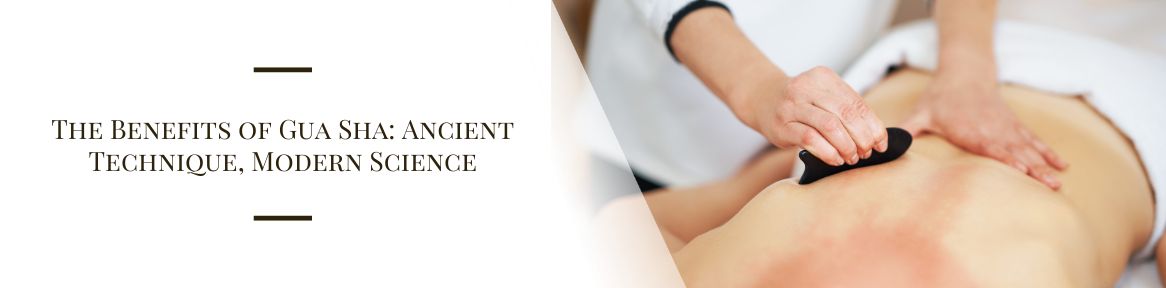
For centuries, practitioners of Traditional Chinese Medicine (TCM) have used Gua Sha to promote healing, circulation, and balance in the body. Think of it as a scraping therapy performed with a smooth-edged tool. Today, it has evolved from a full-body therapeutic practice into a global wellness and skincare ritual used by acupuncturists, massage therapists, estheticians, athletes, and everyday consumers.
But beyond the viral beauty videos and jade tools lies a growing body of research exploring what Gua Sha does physiologically. Surprisingly, many of its claimed benefits like pain relief, improved circulation, reduced inflammation, and lymphatic movement, now have measurable biological explanations. continue reading
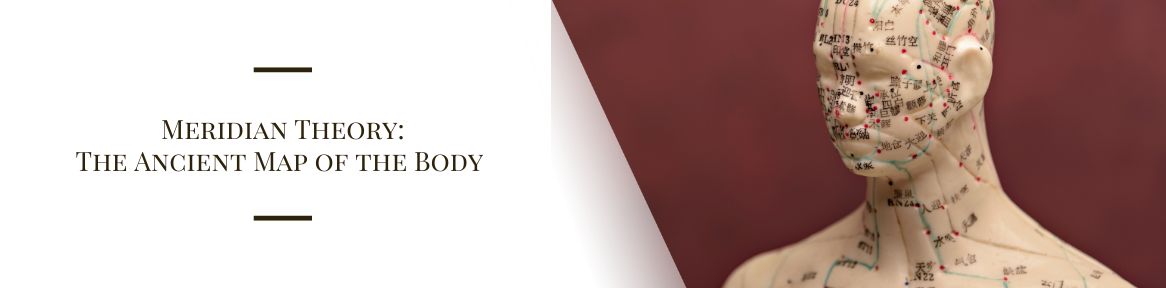
For thousands of years, practitioners of Traditional Chinese Medicine (TCM) have described the human body using a very different “anatomy” than modern Western medicine. Instead of nerves, vessels, and organs alone, they spoke of an energetic network or a communication system linking every structure, function, and sensation.
This network is called the meridian system. Today, interest in acupuncture, fascia research, bioelectric signaling, and integrative medicine has brought Meridian Theory back into scientific conversation. Researchers are now asking: Are meridians symbolic or do they represent real physiological pathways? continue reading




Acupuncture Websites designed by AcuPerfect Websites © 2026. All Rights Reserved. Terms of Use. Privacy Policy.